
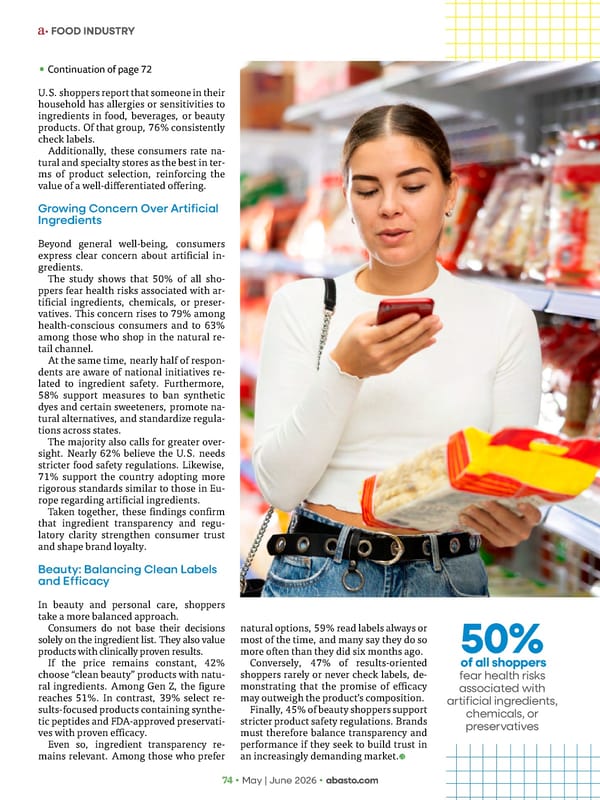
74 • May | June 2026 • abasto.com U.S. shoppers report that someone in their household has allergies or sensitivities to ingredients in food, beverages, or beauty products. Of that group, 76% consistently check labels. Additionally, these consumers rate na- tural and specialty stores as the best in ter- ms of product selection, reinforcing the value of a well-differentiated offering. Growing Concern Over Artificial Ingredients Beyond general well-being, consumers express clear concern about artificial in- gredients. The study shows that 50% of all sho- ppers fear health risks associated with ar- tificial ingredients, chemicals, or preser- vatives. This concern rises to 79% among health-conscious consumers and to 63% among those who shop in the natural re- tail channel. At the same time, nearly half of respon- dents are aware of national initiatives re- lated to ingredient safety. Furthermore, 58% support measures to ban synthetic dyes and certain sweeteners, promote na- tural alternatives, and standardize regula- tions across states. The majority also calls for greater over- sight. Nearly 62% believe the U.S. needs stricter food safety regulations. Likewise, 71% support the country adopting more rigorous standards similar to those in Eu- rope regarding artificial ingredients. Taken together, these findings confirm that ingredient transparency and regu- latory clarity strengthen consumer trust and shape brand loyalty. Beauty: Balancing Clean Labels and Efficacy In beauty and personal care, shoppers take a more balanced approach. Consumers do not base their decisions solely on the ingredient list. They also value products with clinically proven results. If the price remains constant, 42% choose “clean beauty” products with natu- ral ingredients. Among Gen Z, the figure reaches 51%. In contrast, 39% select re- sults-focused products containing synthe- tic peptides and FDA-approved preservati- ves with proven efficacy. Even so, ingredient transparency re- mains relevant. Among those who prefer natural options, 59% read labels always or most of the time, and many say they do so more often than they did six months ago. Conversely, 47% of results-oriented shoppers rarely or never check labels, de- monstrating that the promise of efficacy may outweigh the product’s composition. Finally, 45% of beauty shoppers support stricter product safety regulations. Brands must therefore balance transparency and performance if they seek to build trust in an increasingly demanding market. • Continuation of page 72 50% of all shoppers fear health risks associated with artificial ingredients, chemicals, or preservatives • FOOD INDUSTRY
 Abasto Magazine - May/June 2026 ENGLISH Page 121 Page 123