
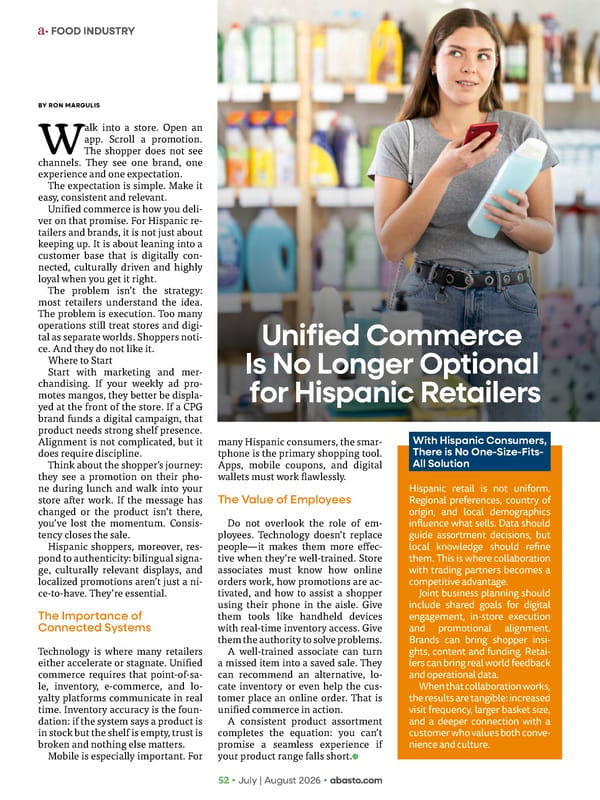
52 • July | August 2026 • abasto.com BY RON MARGULIS W alk into a store. Open an app. Scroll a promotion. The shopper does not see channels. They see one brand, one experience and one expectation. The expectation is simple. Make it easy, consistent and relevant. Unified commerce is how you deli- ver on that promise. For Hispanic re- tailers and brands, it is not just about keeping up. It is about leaning into a customer base that is digitally con- nected, culturally driven and highly loyal when you get it right. The problem isn’t the strategy: most retailers understand the idea. The problem is execution. Too many operations still treat stores and digi- tal as separate worlds. Shoppers noti- ce. And they do not like it. Where to Start Start with marketing and mer- chandising. If your weekly ad pro- motes mangos, they better be displa- yed at the front of the store. If a CPG brand funds a digital campaign, that product needs strong shelf presence. Alignment is not complicated, but it does require discipline. Think about the shopper’s journey: they see a promotion on their pho- ne during lunch and walk into your store after work. If the message has changed or the product isn’t there, you’ve lost the momentum. Consis- tency closes the sale. Hispanic shoppers, moreover, res- pond to authenticity: bilingual signa- ge, culturally relevant displays, and localized promotions aren’t just a ni- ce-to-have. They’re essential. The Importance of Connected Systems Technology is where many retailers either accelerate or stagnate. Unified commerce requires that point-of-sa- le, inventory, e-commerce, and lo- yalty platforms communicate in real time. Inventory accuracy is the foun- dation: if the system says a product is in stock but the shelf is empty, trust is broken and nothing else matters. Mobile is especially important. For many Hispanic consumers, the smar- tphone is the primary shopping tool. Apps, mobile coupons, and digital wallets must work flawlessly. The Value of Employees Do not overlook the role of em- ployees. Technology doesn’t replace people—it makes them more effec- tive when they’re well-trained. Store associates must know how online orders work, how promotions are ac- tivated, and how to assist a shopper using their phone in the aisle. Give them tools like handheld devices with real-time inventory access. Give them the authority to solve problems. A well-trained associate can turn a missed item into a saved sale. They can recommend an alternative, lo- cate inventory or even help the cus- tomer place an online order. That is unified commerce in action. A consistent product assortment completes the equation: you can’t promise a seamless experience if your product range falls short. ] Hispanic retail is not uniform. Regional preferences, country of origin, and local demographics influence what sells. Data should guide assortment decisions, but local knowledge should refine them. This is where collaboration with trading partners becomes a competitive advantage. Joint business planning should include shared goals for digital engagement, in-store execution and promotional alignment. Brands can bring shopper insi- ghts, content and funding. Retai- lers can bring real world feedback and operational data. When that collaboration works, the results are tangible: increased visit frequency, larger basket size, and a deeper connection with a customer who values both conve- nience and culture. With Hispanic Consumers, There is No One-Size-Fits- All Solution Unified Commerce Is No Longer Optional for Hispanic Retailers • FOOD INDUSTRY
 Abasto Magazine - July/August 2026 english Page 67 Page 69