
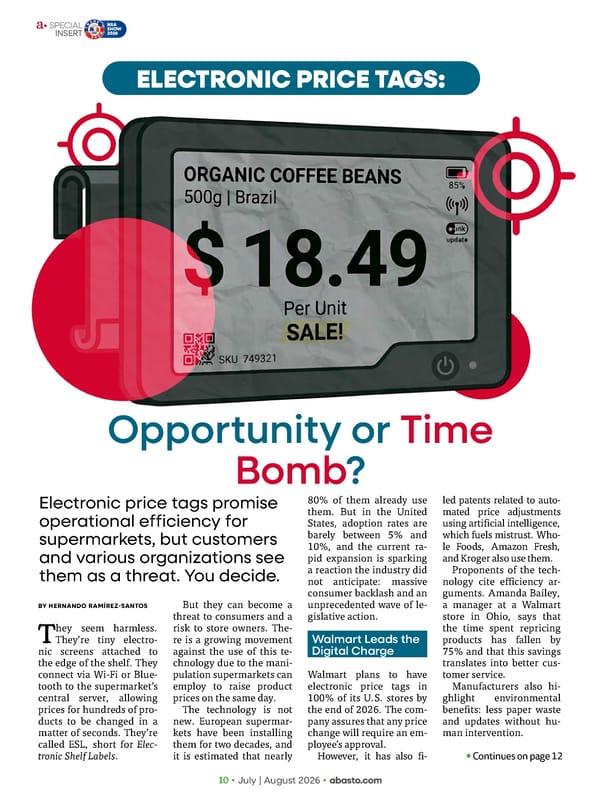
10 • July | August 2026 • abasto.com BY HERNANDO RAMÍREZ-SANTOS T hey seem harmless. They’re tiny electro- nic screens attached to the edge of the shelf. They connect via Wi-Fi or Blue- tooth to the supermarket’s central server, allowing prices for hundreds of pro- ducts to be changed in a matter of seconds. They’re called ESL, short for Elec- tronic Shelf Labels. But they can become a threat to consumers and a risk to store owners. The- re is a growing movement against the use of this te- chnology due to the mani- pulation supermarkets can employ to raise product prices on the same day. The technology is not new. European supermar- kets have been installing them for two decades, and it is estimated that nearly led patents related to auto- mated price adjustments using artificial intelligence, which fuels mistrust. Who- le Foods, Amazon Fresh, and Kroger also use them. Proponents of the tech- nology cite efficiency ar- guments. Amanda Bailey, a manager at a Walmart store in Ohio, says that the time spent repricing products has fallen by 75% and that this savings translates into better cus- tomer service. Manufacturers also hi- ghlight environmental benefits: less paper waste and updates without hu- man intervention. Electronic price tags promise operational efficiency for supermarkets, but customers and various organizations see them as a threat. You decide. 80% of them already use them. But in the United States, adoption rates are barely between 5% and 10%, and the current ra- pid expansion is sparking a reaction the industry did not anticipate: massive consumer backlash and an unprecedented wave of le- gislative action. Walmart Leads the Digital Charge Walmart plans to have electronic price tags in 100% of its U.S. stores by the end of 2026. The com- pany assures that any price change will require an em- ployee’s approval. However, it has also fi- Opportunity or Time Bomb? SPECIAL INSERT NSA SHOW 2026 • Continues on page 12 ELECTRONIC PRICE TAGS:
 Abasto Magazine - July/August 2026 english Page 59 Page 61