
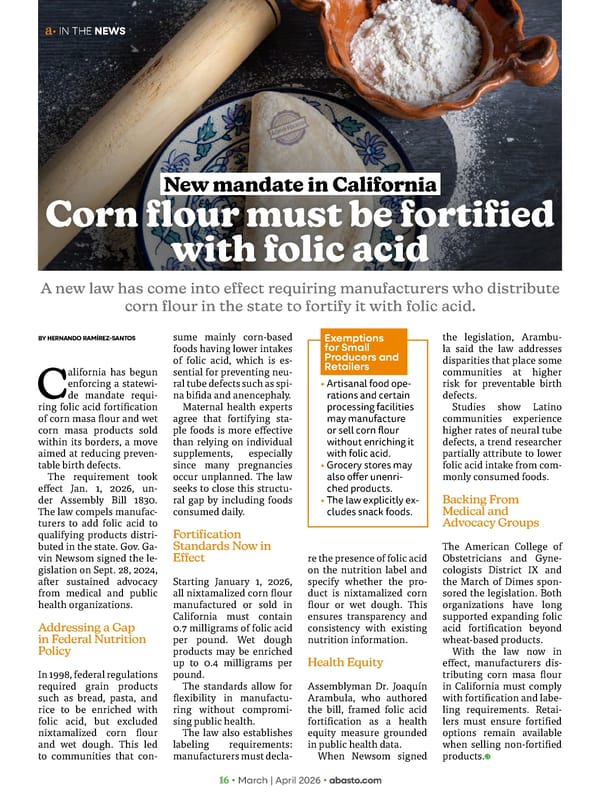
16 • March | April 2026 • abasto.com BY HERNANDO RAMÍREZ-SANTOS C alifornia has begun enforcing a statewi- de mandate requi- ring folic acid fortification of corn masa flour and wet corn masa products sold within its borders, a move aimed at reducing preven- table birth defects. The requirement took effect Jan. 1, 2026, un- der Assembly Bill 1830. The law compels manufac- turers to add folic acid to qualifying products distri- buted in the state. Gov. Ga- vin Newsom signed the le- gislation on Sept. 28, 2024, after sustained advocacy from medical and public health organizations. Addressing a Gap in Federal Nutrition Policy In 1998, federal regulations required grain products such as bread, pasta, and rice to be enriched with folic acid, but excluded nixtamalized corn flour and wet dough. This led to communities that con- Corn flour must be fortified with folic acid New mandate in California A new law has come into effect requiring manufacturers who distribute corn flour in the state to fortify it with folic acid. sume mainly corn-based foods having lower intakes of folic acid, which is es- sential for preventing neu- ral tube defects such as spi- na bifida and anencephaly. Maternal health experts agree that fortifying sta- ple foods is more effective than relying on individual supplements, especially since many pregnancies occur unplanned. The law seeks to close this structu- ral gap by including foods consumed daily. Fortification Standards Now in Effect Starting January 1, 2026, all nixtamalized corn flour manufactured or sold in California must contain 0.7 milligrams of folic acid per pound. Wet dough products may be enriched up to 0.4 milligrams per pound. The standards allow for flexibility in manufactu- ring without compromi- sing public health. The law also establishes labeling requirements: manufacturers must decla- re the presence of folic acid on the nutrition label and specify whether the pro- duct is nixtamalized corn flour or wet dough. This ensures transparency and consistency with existing nutrition information. Health Equity Assemblyman Dr. Joaquín Arambula, who authored the bill, framed folic acid fortification as a health equity measure grounded in public health data. When Newsom signed the legislation, Arambu- la said the law addresses disparities that place some communities at higher risk for preventable birth defects. Studies show Latino communities experience higher rates of neural tube defects, a trend researcher partially attribute to lower folic acid intake from com- monly consumed foods. Backing From Medical and Advocacy Groups The American College of Obstetricians and Gyne- cologists District IX and the March of Dimes spon- sored the legislation. Both organizations have long supported expanding folic acid fortification beyond wheat-based products. With the law now in effect, manufacturers dis- tributing corn masa flour in California must comply with fortification and labe- ling requirements. Retai- lers must ensure fortified options remain available when selling non-fortified products. Exemptions for Small Producers and Retailers • Artisanal food ope- rations and certain processing facilities may manufacture or sell corn flour without enriching it with folic acid. • Grocery stores may also offer unenri- ched products. • The law explicitly ex- cludes snack foods. • IN THE NEWS
 Abasto Magazine March / April 2026 ENGLISH Page 15 Page 17