
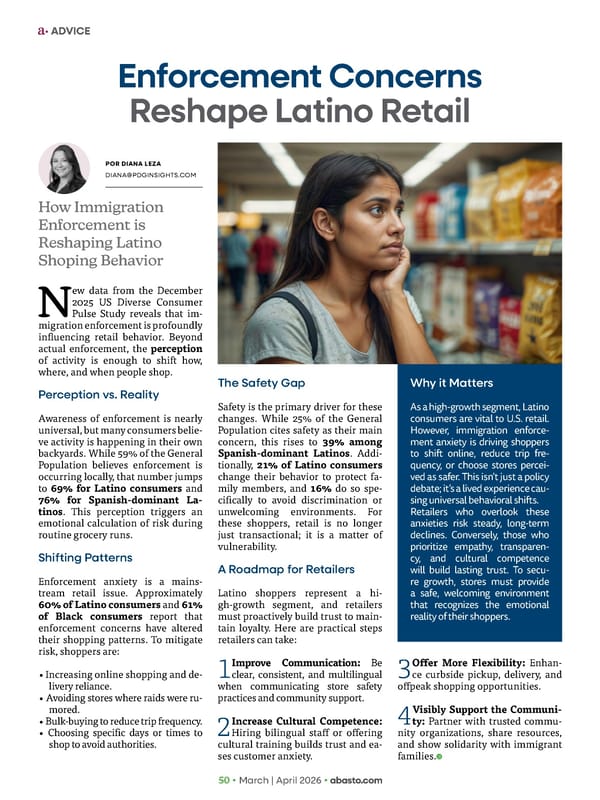
50 • March | April 2026 • abasto.com POR DIANA LEZA DIANA@PDGINSIGHTS.COM Enforcement Concerns Reshape Latino Retail How Immigration Enforcement is Reshaping Latino Shoping Behavior N ew data from the December 2025 US Diverse Consumer Pulse Study reveals that im- migration enforcement is profoundly influencing retail behavior. Beyond actual enforcement, the perception of activity is enough to shift how, where, and when people shop. Perception vs. Reality Awareness of enforcement is nearly universal, but many consumers belie- ve activity is happening in their own backyards. While 59% of the General Population believes enforcement is occurring locally, that number jumps to 69% for Latino consumers and 76% for Spanish-dominant La- tinos . This perception triggers an emotional calculation of risk during routine grocery runs. Shifting Patterns Enforcement anxiety is a mains- tream retail issue. Approximately 60% of Latino consumers and 61% of Black consumers report that enforcement concerns have altered their shopping patterns. To mitigate risk, shoppers are: • Increasing online shopping and de- livery reliance. • Avoiding stores where raids were ru- mored. • Bulk-buying to reduce trip frequency. • Choosing specific days or times to shop to avoid authorities. The Safety Gap Safety is the primary driver for these changes. While 25% of the General Population cites safety as their main concern, this rises to 39% among Spanish-dominant Latinos . Addi- tionally, 21% of Latino consumers change their behavior to protect fa- mily members, and 16% do so spe- cifically to avoid discrimination or unwelcoming environments. For these shoppers, retail is no longer just transactional; it is a matter of vulnerability. A Roadmap for Retailers Latino shoppers represent a hi- gh-growth segment, and retailers must proactively build trust to main- tain loyalty. Here are practical steps retailers can take: 1 Improve Communication: Be clear, consistent, and multilingual when communicating store safety practices and community support. 2 Increase Cultural Competence: Hiring bilingual staff or offering cultural training builds trust and ea- ses customer anxiety. 3 Offer More Flexibility: Enhan- ce curbside pickup, delivery, and offpeak shopping opportunities. 4 Visibly Support the Communi- ty: Partner with trusted commu- nity organizations, share resources, and show solidarity with immigrant families. Why it Matters As a high-growth segment, Latino consumers are vital to U.S. retail. However, immigration enforce- ment anxiety is driving shoppers to shift online, reduce trip fre- quency, or choose stores percei- ved as safer. This isn’t just a policy debate; it’s a lived experience cau- sing universal behavioral shifts. Retailers who overlook these anxieties risk steady, long-term declines. Conversely, those who prioritize empathy, transparen- cy, and cultural competence will build lasting trust. To secu- re growth, stores must provide a safe, welcoming environment that recognizes the emotional reality of their shoppers. • ADVICE
 Abasto Magazine March / April 2026 ENGLISH Page 49 Page 51