
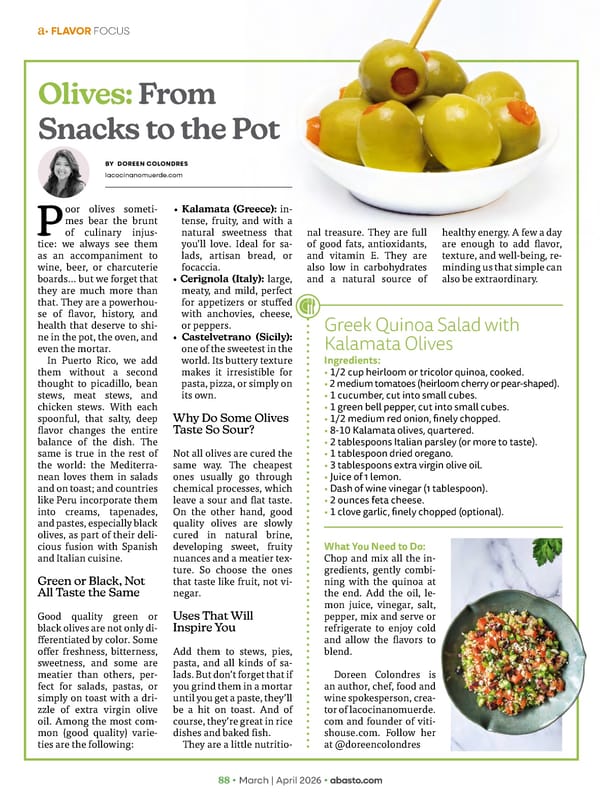
88 • March | April 2026 • abasto.com P oor olives someti- mes bear the brunt of culinary injus- tice: we always see them as an accompaniment to wine, beer, or charcuterie boards... but we forget that they are much more than that. They are a powerhou- se of flavor, history, and health that deserve to shi- ne in the pot, the oven, and even the mortar. In Puerto Rico, we add them without a second thought to picadillo, bean stews, meat stews, and chicken stews. With each spoonful, that salty, deep flavor changes the entire balance of the dish. The same is true in the rest of the world: the Mediterra- nean loves them in salads and on toast; and countries like Peru incorporate them into creams, tapenades, and pastes, especially black olives, as part of their deli- cious fusion with Spanish and Italian cuisine. Green or Black, Not All Taste the Same Good quality green or black olives are not only di- fferentiated by color. Some offer freshness, bitterness, sweetness, and some are meatier than others, per- fect for salads, pastas, or simply on toast with a dri- zzle of extra virgin olive oil. Among the most com- mon (good quality) varie- ties are the following: • Kalamata (Greece): in- tense, fruity, and with a natural sweetness that you’ll love. Ideal for sa- lads, artisan bread, or focaccia. • Cerignola (Italy): large, meaty, and mild, perfect for appetizers or stuffed with anchovies, cheese, or peppers. • Castelvetrano (Sicily): one of the sweetest in the world. Its buttery texture makes it irresistible for pasta, pizza, or simply on its own. Why Do Some Olives Taste So Sour? Not all olives are cured the same way. The cheapest ones usually go through chemical processes, which leave a sour and flat taste. On the other hand, good quality olives are slowly cured in natural brine, developing sweet, fruity nuances and a meatier tex- ture. So choose the ones that taste like fruit, not vi- negar. Uses That Will Inspire You Add them to stews, pies, pasta, and all kinds of sa- lads. But don’t forget that if you grind them in a mortar until you get a paste, they’ll be a hit on toast. And of course, they’re great in rice dishes and baked fish. They are a little nutritio- BY DOREEN COLONDRES lacocinanomuerde.com Ingredients: • 1/2 cup heirloom or tricolor quinoa, cooked. • 2 medium tomatoes (heirloom cherry or pear-shaped). • 1 cucumber, cut into small cubes. • 1 green bell pepper, cut into small cubes. • 1/2 medium red onion, finely chopped. • 8-10 Kalamata olives, quartered. • 2 tablespoons Italian parsley (or more to taste). • 1 tablespoon dried oregano. • 3 tablespoons extra virgin olive oil. • Juice of 1 lemon. • Dash of wine vinegar (1 tablespoon). • 2 ounces feta cheese. • 1 clove garlic, finely chopped (optional). Greek Quinoa Salad with Kalamata Olives nal treasure. They are full of good fats, antioxidants, and vitamin E. They are also low in carbohydrates and a natural source of healthy energy. A few a day are enough to add flavor, texture, and well-being, re- minding us that simple can also be extraordinary. What You Need to Do: Chop and mix all the in- gredients, gently combi- ning with the quinoa at the end. Add the oil, le- mon juice, vinegar, salt, pepper, mix and serve or refrigerate to enjoy cold and allow the flavors to blend. Doreen Colondres is an author, chef, food and wine spokesperson, crea- tor of lacocinanomuerde. com and founder of viti- shouse.com. Follow her at @doreencolondres Olives: From Snacks to the Pot • FLAVOR FOCUS
 Abasto Magazine March / April 2026 ENGLISH Page 111 Page 113