
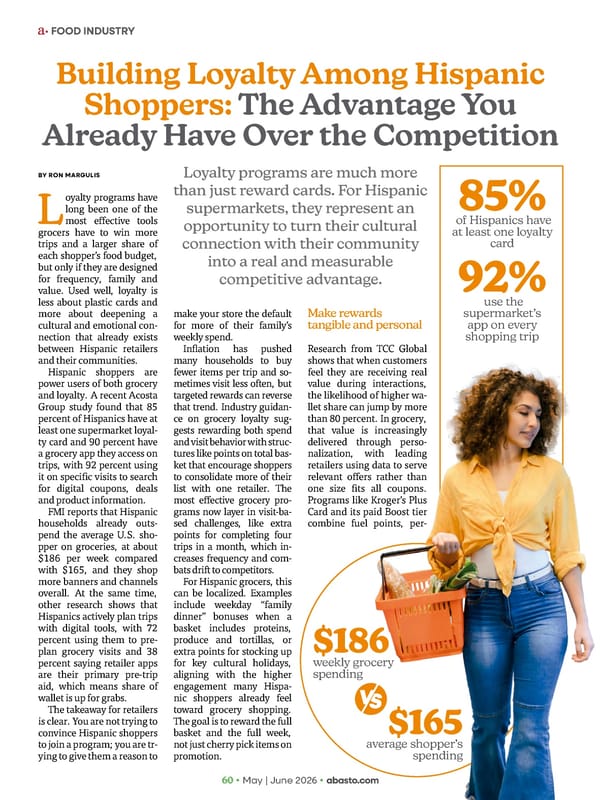
60 • May | June 2026 • abasto.com BY RON MARGULIS L oyalty programs have long been one of the most effective tools grocers have to win more trips and a larger share of each shopper’s food budget, but only if they are designed for frequency, family and value. Used well, loyalty is less about plastic cards and more about deepening a cultural and emotional con- nection that already exists between Hispanic retailers and their communities. Hispanic shoppers are power users of both grocery and loyalty. A recent Acosta Group study found that 85 percent of Hispanics have at least one supermarket loyal- ty card and 90 percent have a grocery app they access on trips, with 92 percent using it on specific visits to search for digital coupons, deals and product information. FMI reports that Hispanic households already outs- pend the average U.S. sho- pper on groceries, at about $186 per week compared with $165, and they shop more banners and channels overall. At the same time, other research shows that Hispanics actively plan trips with digital tools, with 72 percent using them to pre- plan grocery visits and 38 percent saying retailer apps are their primary pre-trip aid, which means share of wallet is up for grabs. The takeaway for retailers is clear. You are not trying to convince Hispanic shoppers to join a program; you are tr- ying to give them a reason to Building Loyalty Among Hispanic Shoppers: The Advantage You Already Have Over the Competition Make rewards tangible and personal Research from TCC Global shows that when customers feel they are receiving real value during interactions, the likelihood of higher wa- llet share can jump by more than 80 percent. In grocery, that value is increasingly delivered through perso- nalization, with leading retailers using data to serve relevant offers rather than one size fits all coupons. Programs like Kroger’s Plus Card and its paid Boost tier combine fuel points, per- Loyalty programs are much more than just reward cards. For Hispanic supermarkets, they represent an opportunity to turn their cultural connection with their community into a real and measurable competitive advantage. make your store the default for more of their family’s weekly spend. Inflation has pushed many households to buy fewer items per trip and so- metimes visit less often, but targeted rewards can reverse that trend. Industry guidan- ce on grocery loyalty sug- gests rewarding both spend and visit behavior with struc- tures like points on total bas- ket that encourage shoppers to consolidate more of their list with one retailer. The most effective grocery pro- grams now layer in visit-ba- sed challenges, like extra points for completing four trips in a month, which in- creases frequency and com- bats drift to competitors. For Hispanic grocers, this can be localized. Examples include weekday “family dinner” bonuses when a basket includes proteins, produce and tortillas, or extra points for stocking up for key cultural holidays, aligning with the higher engagement many Hispa- nic shoppers already feel toward grocery shopping. The goal is to reward the full basket and the full week, not just cherry pick items on promotion. 85% of Hispanics have at least one loyalty card 92% use the supermarket’s app on every shopping trip $186 weekly grocery spending $165 average shopper’s spending • FOOD INDUSTRY
 Abasto Magazine - May/June 2026 ENGLISH Page 107 Page 109